

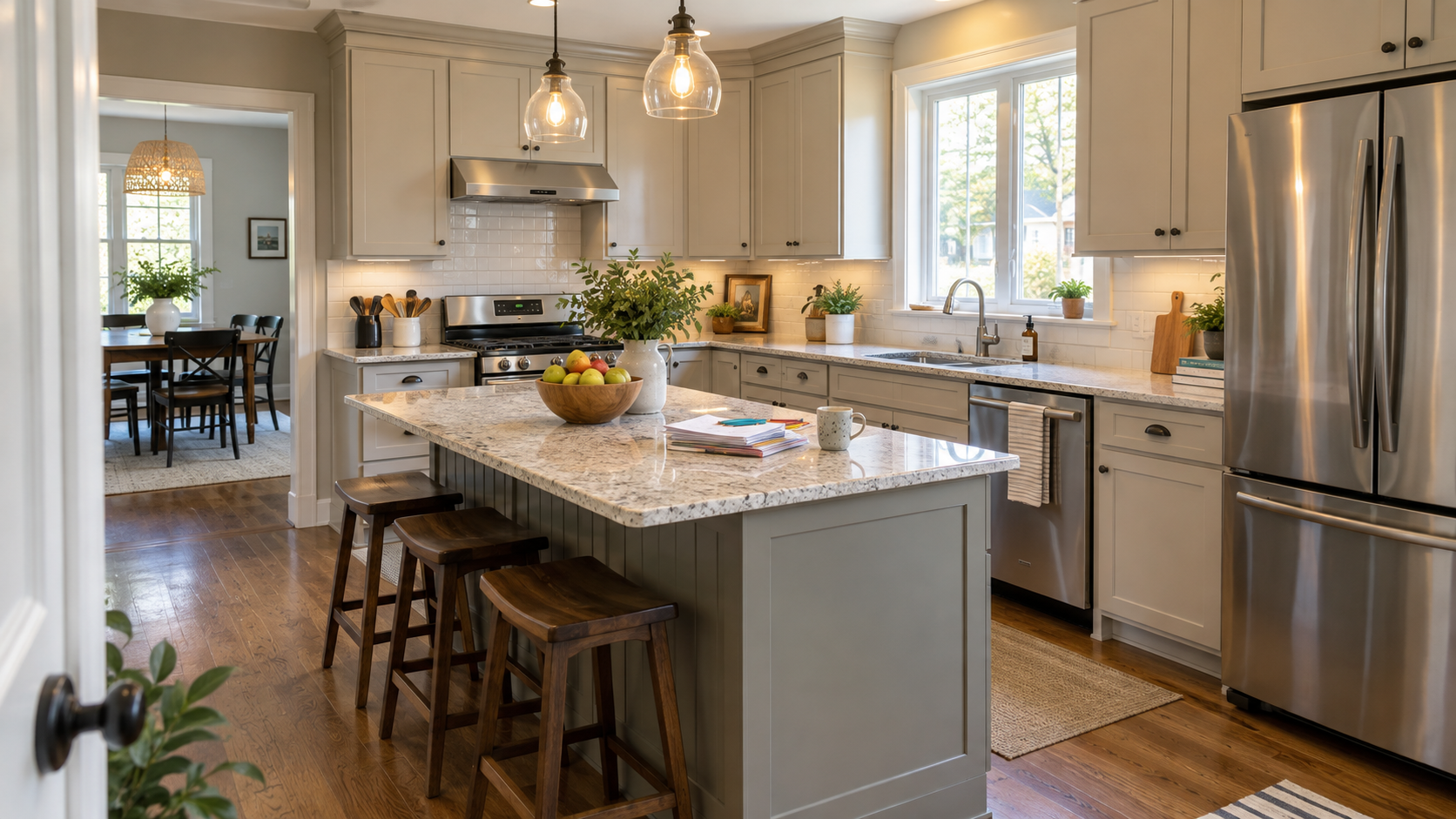
New countertops can increase home value, but the return is rarely a clean dollar-for-dollar calculation. Their biggest effect may be making the kitchen feel cared for, current, and ready to use. That can strengthen listing photos and remove a renovation from a buyer’s mental to-do list.
The result depends on what you replace, how the new surface fits the home, and what the complete project costs. Before you approve a slab, compare the financial return with the value you will get from using the kitchen yourself.
Do New Countertops Increase Home Value?
Yes, new countertops can improve resale value and buyer appeal, especially when the existing counters are damaged, hard to clean, or visibly dated. They can also make cabinets and finishes around them feel more current without changing the kitchen layout.
That does not mean every replacement pays for itself. Home value depends on the whole property, comparable sales, buyer demand, and the quality of the finished work. A national return for a minor kitchen remodel is not a countertop-only return.
Marketability matters, too. A buyer may not assign a separate dollar amount to the countertops, but a clean and coherent kitchen can reduce the number of changes they expect after closing. That can help the home compete, even when the appraisal does not credit every dollar spent.
If you are replacing counters only for resale, ask a local real estate professional how your kitchen compares with nearby listings before choosing the scope.
When Countertop Replacement Is Most Likely to Help

Replacement tends to make the most sense when the existing surface creates an obvious objection and the rest of the kitchen still has useful life.
Common examples include cracked tile, swollen laminate edges, deep stains, failed seams, or colors that clash with otherwise sound cabinets. In those cases, a countertop update can remove a visible sign of deferred work without turning into a full remodel.
The timeline matters. If you plan to stay in the home for several years, you receive daily-use value before resale enters the picture. Better workspace, easier cleaning, and a surface that fits your cooking habits count even if the future sale does not return the full cost.
Replacement may be harder to justify when the cabinets are failing, the layout needs major changes, or the new material would exceed what buyers expect in the neighborhood. A polished surface cannot resolve every weakness around it.
Before removing a serviceable natural stone counter, ask whether professional cleaning, resealing, or repair could address the concern. The right answer may be repair, replacement, or leaving the surface alone and directing the budget elsewhere.
What Determines the Return on New Countertops?
Start with the current condition. Replacing a worn surface creates a clearer difference than swapping one functional counter for another because the new color is more current.
Then look at the home and neighborhood. A costly quartzite installation may make sense in one property and count as over-improvement in another. Buyers compare the kitchen with the rest of the house and with nearby homes in the same price range.
The complete installed cost matters just as much as the material. Slab count, layout, cutouts, edges, backsplash, tear-out, access, and support can change the total. Compare complete installed scopes instead of material prices before estimating a return.
Workmanship also shapes the result. Poor seam placement, weak support, rushed cutouts, or a pattern that feels disconnected across the room can reduce the value of an expensive material. Careful templating and fabrication help the finished kitchen look planned.
Finally, consider the sale timeline. A long-term owner can choose for personal use and future appeal. A seller listing soon may need a more restrained update that removes objections without taking on a renovation the local market will not repay.
Which Countertop Materials Tend to Appeal to Buyers?

Buyers often respond to surfaces that look well maintained, suit the home, and feel manageable to own. The material name helps, but condition and fit still do much of the work.
Zillow’s March 2026 analysis found that listings mentioning quartzite sold for 5.3% more than expected. Quartz was associated with a 3% premium. The study reviewed more than two million homes listed in 2025 and controlled for factors such as location, size, home type, and timing.
Those figures show an association, not a guaranteed return from installing new counters. Homes with quartzite may also differ in design, condition, price range, and other features.
Quartzite can appeal to buyers who want a natural slab with movement and strong heat resistance. Quartz suits buyers who prefer controlled patterns and no routine sealing. Granite remains practical for homeowners who value natural variation and heat tolerance. Our granite and quartz comparison explains where each one tends to fit.
Choose a surface that makes sense with the cabinets, flooring, light, and expected care. A broadly workable design usually protects resale better than a costly choice made only because it is popular in 2026.
Price the Project Before You Count on the Return
The strongest countertop decision works for the home now and still makes sense at resale. Visit our Greensboro showroom with cabinet samples, plans, preliminary measurements, and your expected sale timeline. Carolina Custom Surfaces can help you compare materials and understand the fabricated scope before you commit.
If resale is the main goal, pair that information with advice from a local real estate professional. You will make a better decision when the surface, project cost, and neighborhood expectations all point in the same direction.
Frequently Asked Questions About Countertops and Home Value
How Much Value Do New Countertops Add to a Home?
There is no reliable countertop-only percentage that applies to every home. The result depends on the condition of the old counters, material choice, project cost, workmanship, local market, and the rest of the kitchen. Broad kitchen-remodel ROI reports include more than countertops, so they should not be used as a direct estimate. A local real estate professional can help you judge whether the change is likely to matter in your price range.
Should You Replace Countertops Before Selling?
Replace them when they create a clear buyer objection and the surrounding kitchen is still in good condition. Cracks, stains, failed seams, damaged laminate, or difficult-to-clean tile may make replacement worthwhile. If the counters are functional and suit the room, the sale may benefit more from repairs, cleaning, paint, lighting, or professional staging. Price the complete project and compare it with local buyer expectations before starting.
What Countertop Material Is Best for Resale?
The best material for resale is one that fits the home’s price range, looks coherent with the kitchen, and does not create care expectations the likely buyer will reject. Quartz, granite, and quartzite can all work. The choice should reflect the cabinets, layout, neighborhood, and installed budget. Avoid choosing a highly personal pattern or costly stone only because a national trend report says the category is popular.
Is Quartz or Granite Better for Home Value?
Neither material guarantees a better return. Quartz offers controlled patterns, strong stain resistance, and no routine sealing. Granite offers natural slab variation and strong heat tolerance, although many selections need sealing. Buyers may prefer one or the other based on the home and local market. Compare how each material fits the kitchen and daily use instead of treating resale as a contest between names.
Can You Replace Countertops Without Replacing Cabinets?
Yes, if the cabinets are secure, level, and suitable for the new surface. The layout, sink, appliances, overhangs, and support plan also need review before templating. Removing existing countertops can reveal damage or change backsplash conditions, so the scope should account for those possibilities. If the cabinets are failing or the layout will change soon, replacing the counters first may lead to duplicated work.
Is It Better to Repair or Replace Old Countertops?
Repair may make sense when the damage is local and the material still fits the room. Some natural stone chips, seams, stains, or dull areas can be assessed by a qualified professional. Replacement becomes more practical when damage is widespread, the substrate has failed, or the surface no longer works with the planned kitchen. Compare the repair outcome, replacement cost, remaining ownership time, and resale goal before deciding.


