


Granite countertop thickness affects more than the edge you see. It changes the slab’s weight, rigidity, support needs, edge options, and how the pieces move through your home. Most residential projects use 2 cm or 3 cm granite, but the thicker option is not automatically right for every room.
The application should lead the choice. Your cabinets, overhangs, cutouts, selected slab, and fabrication plan all matter. Settle those details together, and thickness becomes a practical decision instead of a guess.
What Is the Standard Thickness for Granite Countertops?
Granite slabs commonly come in 2 cm and 3 cm thicknesses. Two centimeters is about 3/4 inch. Three centimeters is about 1 1/4 inches.
Three-centimeter granite is widely used for kitchen counters and islands because its added rigidity works well across many typical cabinet layouts. Two-centimeter granite may suit bathroom vanities, vertical applications, or projects designed around a supported subtop.
These are nominal measurements. Natural stone can vary slightly across a slab, and availability may differ by color or supplier. Thickness also does not grade the stone. A 3 cm slab is not automatically better granite than a 2 cm slab from the same material.
Use the common application as a starting point, not the final answer. The actual slab, layout, edge, cutouts, cabinet condition, and support plan should confirm the choice.
What Changes Between 2 cm and 3 cm Granite?
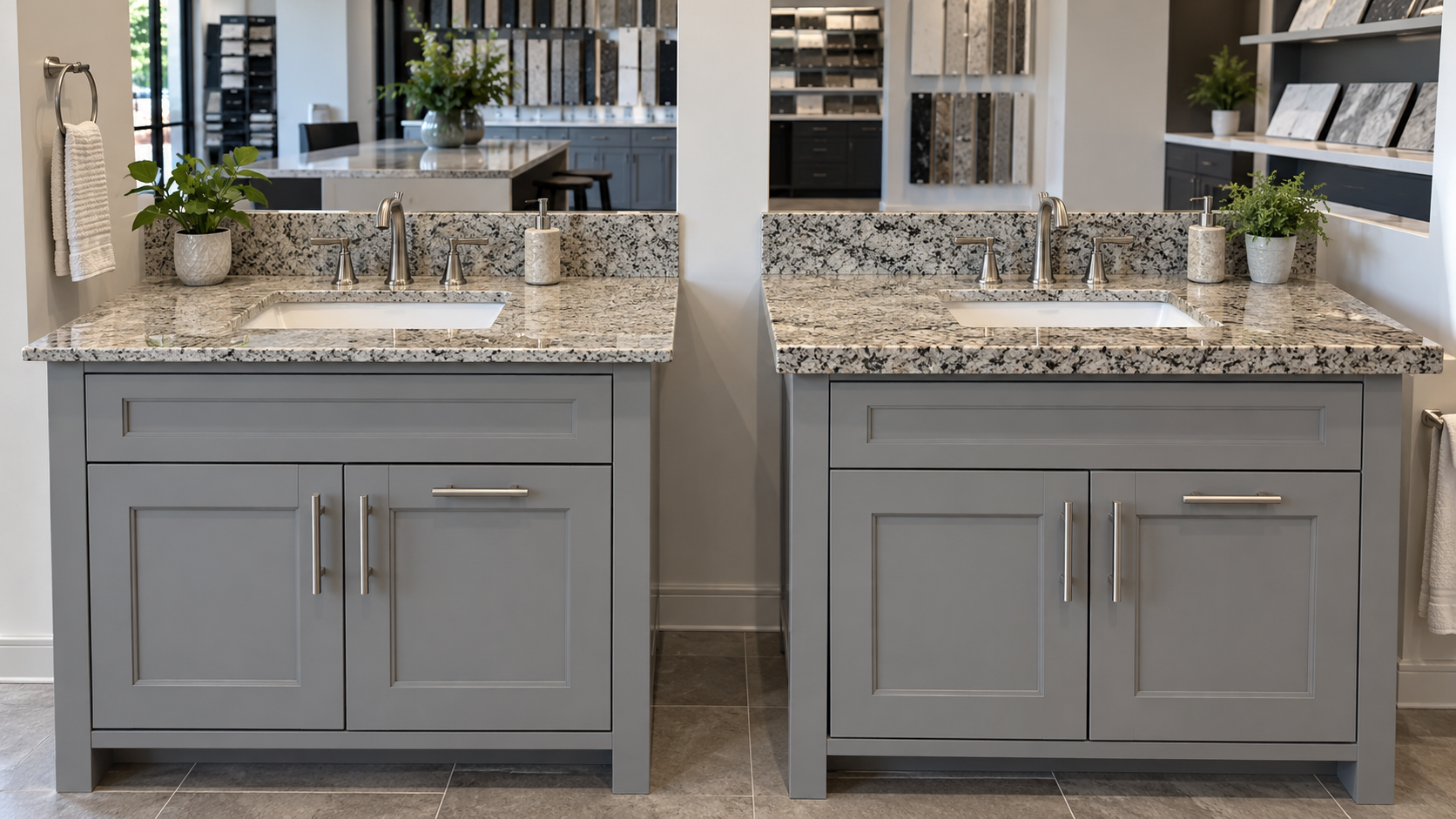
The extra centimeter changes several parts of the project at once.
- Weight: A thicker slab adds more load to the cabinets, floor, and installation plan. Existing or lightly built cabinets may need review before the stone is approved.
- Rigidity: Three-centimeter granite is generally more rigid. Two-centimeter material may use a plywood subtop or another support method, depending on the application and local fabrication practice.
- Edge appearance: A 3 cm slab creates more visible depth without adding a built-up edge. A 2 cm slab can sometimes receive a laminated edge to create a thicker look, but the pattern match and fabrication method affect the result.
- Handling: Thicker granite is heavier. Large islands, stairs, narrow doors, and tight turns can influence seam placement and the size of each installed piece.
- Installed cost: Two-centimeter material may cost less at the slab level, but support, edge build-up, and extra fabrication can narrow the difference. Compare the complete scope rather than the raw material price.
Neither thickness removes the need for careful support. Sink and cooktop cutouts, long spans, seams, and overhangs can create stress points in any slab.
Choose Granite Thickness Around the Application
For many kitchen perimeters, 3 cm granite gives homeowners the visual weight and rigidity they expect. The final support plan still depends on the cabinet layout, stone, cutouts, and spans.
Kitchen islands need closer review. Seating overhangs, sinks, cooktops, and waterfall panels change how the stone carries weight. A thicker slab does not make a long overhang self-supporting. The fabricator and cabinet professional should confirm where brackets, steel supports, corbels, or other reinforcement belong.
Bathroom vanities may use 2 cm or 3 cm granite. A smaller floor-mounted vanity can accommodate either in many projects. A floating vanity adds wall-bracket and weight considerations, so the entire assembly needs review.
Bars and raised counters also depend on the span, traffic, support, and edge design. Vertical backsplashes or wall cladding may favor thinner material because it reduces weight.
Design details can narrow the options. A thick mitered edge, laminated edge, waterfall panel, or detailed profile must work with the selected slab and fabrication method. Discuss the visible edge and the structural plan at the same time.
Confirm the Details Before the Laser Template
Thickness should be settled before the final field measurement. The template captures the shape the fabrication team will use, so the surrounding work needs to be ready.
Confirm these items first:
- Cabinets are installed, level, secure, and in their final position.
- The exact sink, faucet, cooktop, and affected appliances are selected.
- Overhangs, seating, and support locations are defined.
- Edge profiles, backsplashes, and waterfall panels are approved.
- Likely seams and access into the home have been discussed.
Our granite installation guide explains why these decisions belong before the laser template. A late sink, cabinet, or edge change can require new measurements, revised fabrication, added cost, or a schedule adjustment.
Also ask where the slab’s movement will land. Thickness does not control the pattern, but the selected edge and seam plan can change how that movement reads across the finished kitchen.
Choose Thickness With the Full Project in View
Bring your plans, cabinet details, sink information, and edge ideas to the Carolina Custom Surfaces showroom in Greensboro. We can help you compare available granite slabs and review how thickness fits the layout before templating.
The useful answer is not simply 2 cm or 3 cm. It is the thickness that works with your slab, cabinets, support, fabrication details, and the way the room will be used.
Frequently Asked Questions About Granite Countertop Thickness
Is 2 cm or 3 cm Granite Better for Kitchen Countertops?
Three-centimeter granite is widely used for residential kitchens because it offers added rigidity and a thicker visible edge. Two-centimeter granite can still work when the cabinets, subtop, support, and fabrication plan are designed for it. Neither option should be chosen from thickness alone. The slab, sink and cooktop cutouts, overhangs, seam locations, cabinet condition, and installation access all affect the final recommendation.
Does 3 cm Granite Always Need Plywood Underneath?
No universal rule fits every granite project. Three-centimeter slabs often install without a full plywood subtop across typical cabinet runs, but extra support may still be needed around long spans, overhangs, cutouts, weak cabinets, or unusual layouts. The stone itself can also affect the plan. Let the fabricator and cabinet professional review the actual project instead of assuming thickness removes every support concern.
Is 2 cm Granite Strong Enough for a Bathroom Vanity?
Yes, 2 cm granite can work for many bathroom vanities when the base and support are properly designed. Its lower weight may also suit some floating or wall-mounted applications, although the full vanity assembly must support the load. Sink cutouts, span, edge design, cabinet construction, and the selected stone still matter. Confirm the subtop and attachment method before fabrication.
Does Thicker Granite Cost More to Install?
Three-centimeter granite often carries a higher material cost and more weight. Two-centimeter granite may need a plywood subtop, built-up edge, or added fabrication that changes the installed total. Access and handling can also affect labor. Compare proposals with the same slab quantity, edge, cutouts, support, delivery, and installation scope. A lower slab price does not always produce a lower finished price.
Can 2 cm Granite Have a Thicker-Looking Edge?
Often, yes. A fabricator may laminate an additional strip of stone beneath the edge to create more visual depth. The result depends on the granite pattern, seam location, edge profile, and skill of the fabricator. Movement near the edge can make the joint easier or harder to disguise. Review a finished sample or project photo before approving the detail.
Does a Granite Island Overhang Need Extra Support?
It may. The answer depends on the overhang depth, stone, slab thickness, span, cabinet structure, cutouts, and how the island will be used. Seating areas place weight near the outer edge, where someone may lean or sit. Do not rely on a universal overhang number. Have the fabricator and cabinet professional confirm the support plan before templating and installation.


