

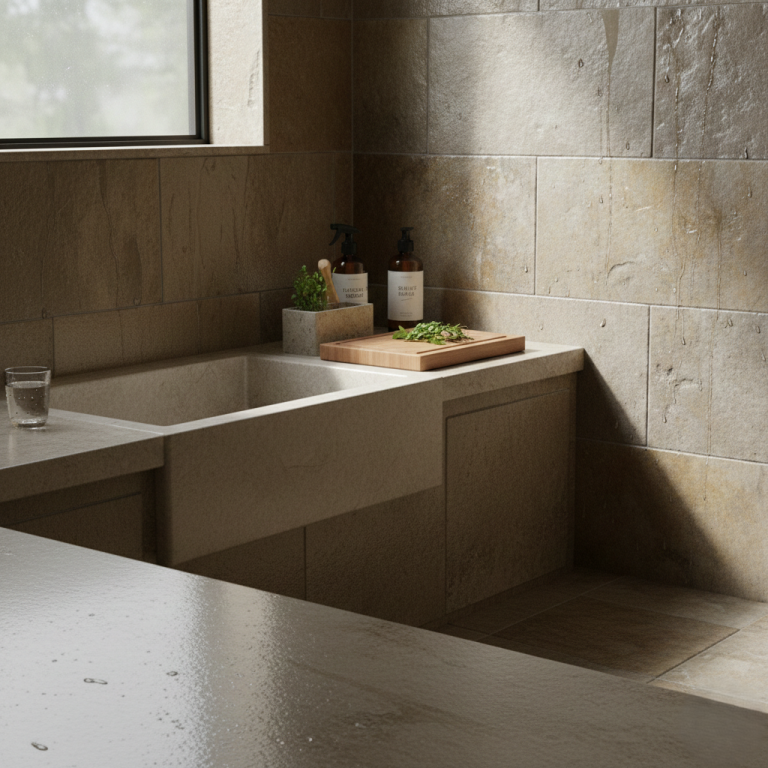
You chose a natural stone shower because it looks and feels different. It gives your bathroom depth, character, and a sense that the space was built with intention. What determines whether it keeps that look has less to do with how hard you scrub and more to do with how you care for it day to day.
Stone reacts to water, soap, and cleaners in specific ways. When you understand those reactions, your shower stays beautiful. When you don’t, the wear shows faster than you expect.
Why Natural Stone Showers Need a Different Approach to Cleaning
If you treat a natural stone shower the same way you would tile or porcelain, problems usually follow. Not right away. Months later. Sometimes years later. The difference comes down to how stone behaves once it is exposed to water every single day.
Stone Is Porous, and That Changes Everything
Your natural stone shower is made from material that formed over time, not in a factory. Marble, travertine, limestone, granite, and soapstone all contain pores. Some are tight. Some are more open. Either way, they matter once the stone is exposed to water every day.
Here’s what that porosity changes in practice:
- Water does not just sit on the surface. It can penetrate the stone, carrying soap residue, body oils, and minerals with it.
- Daily exposure compounds over time. Hard water deposits, grime, and soap scum build slowly, not all at once.
- Moisture lingers longer than it appears. A surface that looks dry can still hold moisture below the finish.
- Grout increases the risk. Stone tile paired with grout creates additional porous areas where mildew, mold, and discoloration can develop.
This is why mold and mildew often return to the same areas, even when you clean regularly. The issue is not effort. It’s how porous surfaces behave once they are exposed to water day after day.
When you respond by scrubbing harder, you often end up damaging the stone rather than solving the problem.
Cleaners That Work on Tile Can Damage Stone
Many bathroom cleaners are designed for tile showers. They rely on acidic ingredients or ammonia to break down soap scum and calcium deposits fast. On natural stone, those same products can etch the surface, dull the finish, and slowly eat away at the sealer that is meant to protect the stone.
This is where confusion usually starts. Soap scum buildup looks similar to etching or haziness. One wipes off. The other is permanent damage. If you use vinegar, bleach, or a harsh bathroom cleaner, you might remove a surface stain but leave behind a dull spot that never quite looks the same again.
Stone-safe, neutral cleaners work differently. They lift grime without penetrating the pores of the stone or breaking down the sealer. They take a little more patience, but they preserve the surface instead of trading short-term cleanliness for long-term damage. When it comes to stone, restraint usually wins.
How Sealing and Daily Habits Protect Stone Long-Term
If a stone shower looks good years later, it is almost never luck. It is the result of protection paired with routine. One without the other falls short.
Sealing Stone Is Protection, Not a One-Time Step
A penetrating stone sealer works below the surface. It fills microscopic pores and helps repel water and oils before they can sink in. What it does not do is make stone waterproof or maintenance-free. That misunderstanding is where most long-term problems begin.
Sealers wear down gradually. Daily water exposure, regular cleaning, and simple use all take a toll. Over time, moisture starts penetrating again, even if the surface still looks fine. This is why sealing stone is ongoing maintenance, not a one-and-done task.
From a fabrication standpoint, professional sealing matters. The right sealer, applied correctly and allowed to cure properly, creates consistent protection.
Improper sealing or skipped maintenance leads to uneven absorption, staining, and discoloration that cannot always be reversed. When people wait until damage is visible, restoration becomes far more complicated than routine sealing ever was.
Small Daily Habits That Make a Big Difference
Sealing sets the baseline. Daily habits determine how well it holds up.
A few small practices change how the stone ages over time:
- Use a squeegee after showering. Removing surface water helps the stone dry faster and limits what can penetrate.
- Wipe down walls with a microfiber cloth. This lifts daily grime before it hardens into buildup.
- Stay ahead of soap scum. Preventing it is far easier than scrubbing it off later.
- Avoid over-cleaning. Too many products and too much abrasion shorten the life of the sealer.
Imagine two identical stone showers installed on the same day. One stays evenly toned and clean years later. The other shows stains, dull spots, and discoloration. It’s not the stone that failed; it’s the routine.
Small, consistent habits are what keep your shower looking the way it should, not stronger cleaners or more effort.
Care for Stone the Right Way From the Start
A natural stone shower is not something you set and forget. It is something you look after with intention. The difference between stone that holds its beauty and stone that slowly degrades usually comes down to guidance, not effort.
If you want clarity on sealing schedules, the right cleaners, and habits that actually protect your shower, talk with a stone professional who works with these materials every day. Getting expert guidance early helps you avoid damage that is easy to cause and difficult to undo. When stone is treated like stone, not tile, it rewards you for years.
FAQs: Natural Stone Shower Care
How often should a natural stone shower be sealed?
It depends on the type of natural stone, how often the shower is used, and the finish. Some stones need sealing more frequently than others. In general, sealing should be viewed as routine maintenance rather than a permanent solution. A stone professional can recommend the right schedule based on your specific shower.
What cleaner is safest for natural stone showers?
Neutral, stone-safe cleaners are best. They remove daily grime and soap residue without damaging the stone or breaking down the sealer. Acidic or ammonia-based products should be avoided, even if they are labeled as bathroom cleaners.
Can stone showers get mold and mildew?
Yes. Stone and grout are porous, so moisture can linger if the shower is not allowed to dry properly. Good ventilation, routine drying, and consistent care help reduce the risk and keep mold and mildew under control.
Is natural stone harder to maintain than porcelain tile?
Natural stone requires more attention than porcelain tile, but that care comes with a tradeoff. Stone offers depth, variation, and natural beauty that manufactured surfaces cannot replicate. When you understand how to care for it, the maintenance is manageable, and the long-term results are worth it.


