

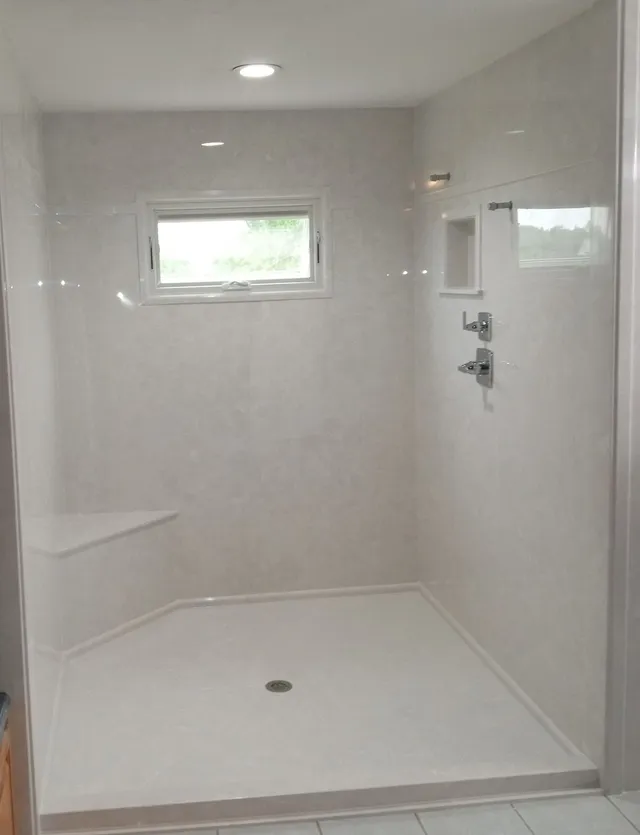
Many homeowners start a bathroom remodel looking for a shower that is easier to maintain than tile, looks more finished than a basic surround, and fits the style of the room.
Cultured marble and acrylic are often compared because both can reduce grout upkeep, but they do not offer the same level of customization, appearance, or long-term performance.
This article takes a practical look at durability, maintenance, style, installation, and choosing the right shower wall material for your space.
Why Homeowners Compare Cultured Marble and Acrylic in the First Place
Cultured marble and acrylic often come up in the same conversation because both give homeowners a way to avoid the upkeep that comes with tile, grout, and grout lines.
In a bathroom remodel, both materials can be used for shower walls, shower surrounds, and other applications where a cleaner, groutless finish is the goal.
That said, they are not usually chosen for the same reason. Acrylic is often seen as the more standard, straightforward option, especially for homeowners focused on a simple replacement. Many people also group fiberglass and acrylic together in that same entry-level category.
Cultured marble tends to appeal to homeowners who want a more custom shower with a more finished appearance and a better fit within the overall bathroom design.
At Carolina Custom Surfaces, we see cultured marble as a practical upgrade over basic acrylic or fiberglass surrounds. It gives you a more tailored look, a more polished finish, and a groutless shower option that is easier to live with than tile.
It is not the highest-end shower material on the market, but it fills an important middle ground if you want more than a basic insert without jumping to the most premium category.
In the end, the real decision usually comes down to how the material looks, how it holds up, and how custom the finished shower feels.
Cultured Marble vs. Acrylic Shower: Durability, Cleaning, and Everyday Maintenance
Once homeowners narrow the choice to cultured marble or acrylic, the next question is usually how each material will perform in daily life. A shower may look good when it is first installed, but what matters most is how it holds up, how easy it is to clean, and how well it fits the routine of a busy bathroom.
How the Two Materials Hold Up Over Time
In practical terms, many homeowners choose cultured marble because they want a shower that feels more substantial and holds its appearance well over time. Compared to many basic acrylic systems, cultured marble often gives the shower area a more solid, finished feel.
That said, no shower wall material is completely immune to wear. Depending on use and care, any surface can eventually dull, show signs of age, or, in some cases, crack or chip. That is why durability is not just about how a material looks at first, but how it performs after years of regular use.
What Day-to-Day Cleaning Really Looks Like
One reason both cultured marble and acrylic are popular is that they reduce the upkeep that comes with tile shower walls and grout. Cultured marble offers a smooth, groutless, non-porous surface that is generally easy to clean with mild products like soap and water.
Acrylic is also designed to be easy to maintain, which is part of its appeal. Where cultured marble often stands apart is in the balance it offers between easy cleaning and a more custom-finished appearance. For homeowners thinking about soap residue, mildew, or mold and mildew, fewer seams and no grout lines can make routine cleaning feel more manageable.
What Homeowners Should Understand About Long-Term Care
At Carolina Custom Surfaces, we often recommend cultured marble to homeowners who want easier upkeep without settling for a basic look. Routine care is usually simple: use non-abrasive cleaners, clean the surface regularly, and pay attention to any visible wear over time.
The goal is not complicated maintenance, but steady care that helps the shower continue to look good and perform well. For many homeowners, that combination of easy maintenance and a more custom appearance is what makes cultured marble such a practical fit.
Cultured Marble vs. Acrylic Shower: Style, Customization, and the Difference in the Finished Look
For many homeowners, the decision is not just about replacing an old shower. It is about choosing a shower wall material that fits the room better and gives the bathroom a more finished look. That is where cultured marble and acrylic often start to separate.
Cultured marble shower walls are often chosen because they create a more custom look than many standard acrylic surrounds. In a bathroom remodeling project, that difference matters. The goal is usually not just to swap out one shower for another, but to improve the overall feel of the space.
With cultured marble, homeowners often have more flexibility in:
- Colors and patterns
- Coordinated shower wall panels
- Custom shower pan options
- The overall fit and finish of the shower
That added flexibility can help the shower feel more integrated with the bathroom instead of looking like a simple insert. Acrylic is often a practical choice for a straightforward replacement, but it may offer fewer design options and a more standard appearance. Homeowners who want a more polished, spa-like feel often start looking beyond basic acrylic wall surrounds for that reason.
If you are remodeling a primary bathroom and want a groutless shower that feels like part of the room rather than a simple insert, cultured marble may be the better fit.
Installation, Cost Expectations, and How to Choose the Best Fit
Choosing between cultured marble and acrylic is not just about the material itself. It is also about how the shower is measured, fabricated, installed, and expected to perform over time.
Why Installation Quality Matters as Much as Material Choice
Even the best shower wall material depends on proper measurement, fabrication, and installation. Fit, waterproofing, finish quality, and long-term performance all rely on getting the details right from the beginning.
At Carolina Custom Surfaces, we build custom groutless shower systems using laser templating, in-house fabrication, and experienced installation crews.
When a project moves forward promptly, the typical timeline from approval to install is around 3 to 4 weeks. That kind of process helps create a shower that looks right, fits right, and performs the way it should.
Cost Expectations Without Oversimplifying the Decision
Cost and installation should be looked at in context, not in isolation. Acrylic is often chosen for straightforward shower surround replacements, while cultured marble is often selected when a homeowner wants more customization and a more finished result.
That does not mean one material is automatically the right answer for every project. The better question is which option gives you the best fit for your goals, your maintenance preferences, and the kind of look you want in the bathroom.
For many homeowners, value comes down to durability, appearance, and how well the shower works over time.
A Simple Way to Choose the Right Material
If you are choosing between acrylic and cultured marble, it helps to step back and think about what matters most in your project:
- How Important is easy maintenance in your daily routine?
- Do You Want a standard surround or a more custom shower?
- How Much does overall appearance matter in the bathroom?
- Are You Prioritizing the simplest replacement, or the best long-term fit for the space?
- Are You Comparing a basic surround with a more tailored groutless shower system?
For homeowners who want a groutless shower with a more custom look and stronger long-term value, cultured marble is often the better fit.
See Cultured Marble Shower Options in Person
If you are comparing shower wall options and want to see the difference for yourself, visiting our showroom is a helpful next step. At Carolina Custom Surfaces, we can walk you through cultured marble, solid surface, and other groutless shower materials so you can compare the look, smooth surface, finish details, and overall fit for your space.
Whether you are planning a full shower remodeling project or replacing a bad shower with something more durable and better integrated, we can help you choose the best material for your shower and the right material for your shower walls.
Frequently Asked Questions About Cultured Marble and Acrylic Shower Surrounds
Is cultured marble better than acrylic for shower walls?
It depends on your goals. Many homeowners prefer cultured marble when they want a more custom look, better design flexibility, and a more finished appearance. Acrylic can still be a practical choice for some projects, but cultured marble is often the better fit when the goal is a more tailored groutless shower.
Are cultured marble shower walls easy to clean?
Yes. Cultured marble shower walls are generally easy to clean because they have a groutless, non-porous, smooth surface. With routine care and mild cleaners, they are often easier to maintain than surfaces with grout lines or real tile walls.
Can cultured marble crack or chip?
Like many shower materials, cultured marble can be damaged under certain conditions. Proper fabrication, professional installation, and everyday care all help support long-term performance and help the shower continue to look its best over time.
Is acrylic a good choice for a shower surround?
Yes, for some projects. Acrylic panels and acrylic shower walls can be a practical option for straightforward replacements, especially when customization is less important. When homeowners compare acrylic vs. cultured marble, the decision usually comes down to the kind of finish, fit, and overall look they want in the bathroom.
How long does a custom cultured marble shower project take?
At Carolina Custom Surfaces, once a customer moves forward promptly, the typical timeline is around 3 to 4 weeks from approval to installation.
What other shower wall materials should homeowners compare?
Depending on the project, some homeowners also compare cultured marble with solid surface materials or engineered stone options. Those materials can offer a different level of finish, customization, and performance depending on what matters most in the space.


