

Choosing kitchen countertops gets easier when you make the decisions in the right order. Start with daily use and care. Then compare materials, full-scale looks, project scope, and key details. Color matters, but it should not lead. A surface can look right in a showroom and still feel wrong at home if the care or install plan does not fit. Avoid these eight mistakes, and you will reach the choice with fewer open questions.
Mistake 1: Choosing by Color Before You Choose for Daily Use
Color is easy to compare. Daily use is less visible, but it decides whether the counter stays easy to live with.
Start with the way your kitchen works on a normal day:
- Cooking habits: Do hot pans, countertop appliances, oils, wine, lemon juice, or tomato sauce show up often?
- Cleanup timing: Are spills wiped immediately, or do they sit while the household handles something else?
- Wear tolerance: Will a scratch, etch, chip, or developing patina feel acceptable or distracting?
- Care routine: Are you willing to follow sealing guidance and use material-safe cleaners?
Those answers narrow the material options before color takes over.
For a more detailed fit test, choose based on household habits instead of shopping for an imaginary version of how the kitchen will be used.
Mistake 2: Underestimating the Maintenance and Aging You Will Notice
“Low maintenance” never means “no care.” The differences are what can happen, what you will notice, and how much attention the material needs.
Natural stone may need sealing. Marble can etch when acids change the finish. Quartz does not need routine sealing, but direct heat can harm its resin binders. Solid surface can scratch, though a trained professional can often renew light marks.
Ask two questions before choosing:
- What can change: Could the surface stain, etch, scratch, chip, discolor, or develop patina?
- What care is realistic: Will you use trivets, cutting boards, suitable cleaners, and any recommended sealing routine?
Choose the type of wear you can accept. If normal use bothers you, the surface will never feel easy to own.
Mistake 3: Approving a Surface From a Small Sample Alone
A sample is useful for color, undertone, and texture. It is not always enough to show what the finished counter will look like.
Natural stone can shift in color, movement, and veining across one slab. Quartz is more controlled, but large patterns may repeat across a long run. Dark or patterned solid surface can show joints and wear more clearly.
Compare the full slab or a larger sample when practical. Step back to see the movement, then move closer to inspect the finish. For a multi-slab project, ask how the pieces will relate.
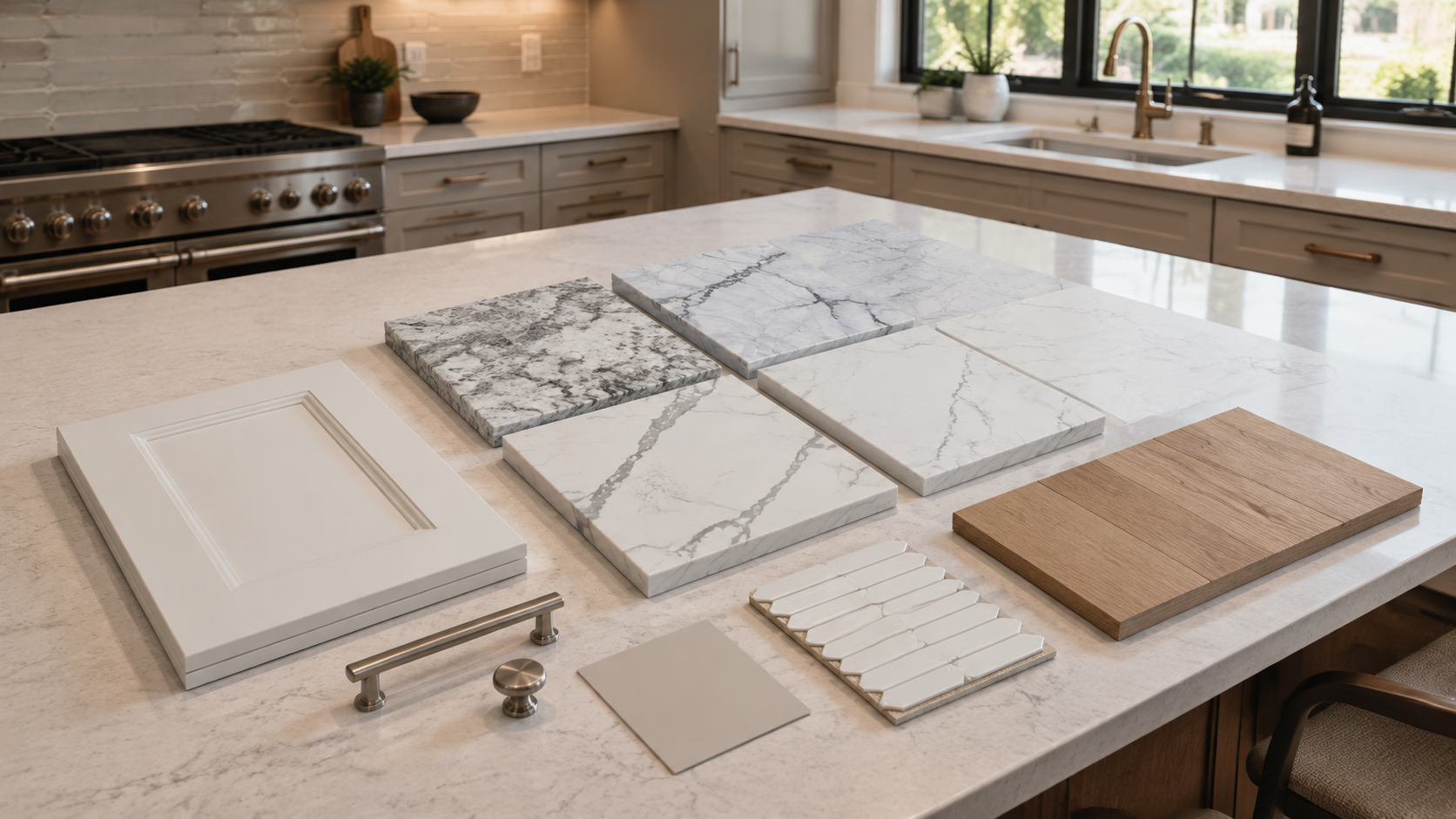
Bring cabinet, floor, paint, and hardware samples. A warm white counter may read gray beside one cabinet and cream beside another. The room changes how the surface looks.
Mistake 4: Comparing Material Prices Instead of Complete Installed Scopes
A material price does not tell you the full project cost. The scope includes more than the slab or sheet.
Make sure each proposal covers the same decisions:
- Material planning: Square footage, number of slabs or sheets, waste, pattern direction, and remnants
- Fabrication: Edge profile, sink and cooktop cutouts, faucet holes, backsplash, special shapes, and finish work
- Installation conditions: Tear-out, disposal, access, supports, cabinet readiness, and delivery constraints
- Other trades: Plumbing, electrical work, appliance handling, and scheduling responsibilities
Carolina Custom Surfaces does not install cabinets or provide plumbing. Confirm who owns those tasks and where their cost appears.
If you still need to narrow the material category, compare common countertop materials before comparing quotes with different assumptions.
Mistake 5: Leaving Seams, Edges, Sinks, and Overhangs Until Late
These details are not decoration added after the material is chosen. They affect layout, fabrication, support, appearance, and cost.
A seam may be needed because of slab size, kitchen shape, access, support needs, or pattern direction. It can be planned well, but it will not be invisible. The edge changes how the counter meets the cabinets. The sink and cooktop control their cutouts. An overhang may need support.
Bring the sink and appliance details into the conversation early. Approve the edge and discuss likely seams before fabrication. Ask who should confirm supports for long spans and seating areas.
The same decision discipline applies across materials. See how granite and quartz compare in daily use if those two categories remain on your list.
Mistake 6: Treating the Template as a Rough Measurement
The countertop template gives the team the final size and shape of the work. Those laser measurements guide the plan and cuts.
Cabinets should be installed, flat, secure, and in their final position. The sink, faucets, cooktop, edges, overhangs, and backsplash plan should also be settled.
If a cabinet moves or the sink changes after templating, the old measurements may no longer work. That can mean a new visit, added cost, or a schedule change.
CCS explains where the laser template measurement fits after approval. Use the appointment as a final checkpoint, not the moment to begin choosing core details.
Mistake 7: Assuming Every Installation Responsibility Is Included
Countertop installation touches cabinets, plumbing, appliances, wiring, and the path into the room. Not every company handles every part.
Confirm these items in writing before the schedule is set:
- Existing countertops: Who handles tear-out and disposal?
- Cabinet readiness: Who confirms the cabinets can receive the new surface?
- Plumbing: Who disconnects and reconnects the sink, faucet, disposal, and water lines?
- Appliances: Who moves or reconnects the cooktop, range, or other affected equipment?
- Access: Who clears the route and protects children, pets, drawers, and nearby belongings?
Review CCS’s getting ready for template and preparing for installation guidance for the detailed checkpoints. Clear ownership prevents last-minute handoff problems.
Mistake 8: Choosing Without Comparing Materials in Person
Online photos help you collect ideas. They cannot show the scale of a stone slab, the repeat in quartz, the feel of a finish, or the shape of an edge.
An in-person comparison makes tradeoffs easier to see. Place cabinet and floor samples beside the surface. Compare polished and honed finishes, then look at natural movement beside a controlled pattern.
Bring what you already have:
- Project information: Plans, preliminary measurements, and sink or appliance details
- Finish samples: Cabinet door, flooring, paint, hardware, and backsplash material
- Real priorities: Care expectations, heat habits, wear tolerance, and budget scope
The goal is to remove poor fits and view the remaining choices at a useful scale.
Make the Countertop Decision in the Right Order
You do not need to compare every surface at once. Use a clear sequence:
- Define how the room is used
- Decide which care and aging patterns you can accept
- Narrow the material category
- Compare full-scale color, movement, and finish
- Price the complete installed scope
- Resolve seams, edges, sinks, backsplashes, and overhangs
- Finalize the room before templating
- Confirm installation and trade responsibilities
That order turns a crowded material search into a manageable project plan.
Compare Countertop Options With Carolina Custom Surfaces
Bring your plans, measurements, inspiration images, or finish samples to the Greensboro showroom. Carolina Custom Surfaces can help you compare materials in person, understand the fabrication details, and define the complete scope before the laser template. With more than 30 years of experience and in-house fabrication, the team can answer the questions that matter before the surface is cut, not after.
Frequently Asked Questions About Choosing Countertops
What should I consider first when choosing kitchen countertops?
Start with daily use. Think about heat, spills, cleaning habits, children, wear tolerance, and sealing. Those answers narrow the material category. Then compare appearance, full project cost, fabrication details, and installation duties.
Which countertop material is easiest to maintain?
Quartz and solid surface are often easier to maintain because they are nonporous and need no routine sealing. They still need cutting boards, suitable cleaners, and heat protection. The easiest material is the one whose care rules match your habits.
Should I choose cabinets or countertops first?
Set the cabinet style and layout before the final countertop choice and template. You can choose both finishes together, but the cabinets must be installed, secure, flat, and final before field measurements.
Is a small sample enough to choose a countertop?
Sometimes it is enough for a simple, consistent color. It is rarely enough to understand broad natural movement, large quartz veining, pattern repeats, or multi-slab coordination. View a full slab or larger sample whenever scale and variation could affect the finished design.
What can change the final countertop price?
Material selection, square footage, number of slabs or sheets, waste, edge profiles, cutouts, backsplash, supports, pattern layout, access, fabrication complexity, installation, tear-out, and other trades can all affect cost. Compare complete proposals with the same scope instead of isolated material prices.
When do countertop details become final?
Core details should be settled before the template appointment. The final cabinet layout, sink, faucets, cooktop, edges, overhangs, backsplash plan, and appliance clearances feed the fabrication plan. Changes after templating can require new measurements, revised work, added cost, or schedule movement.


