

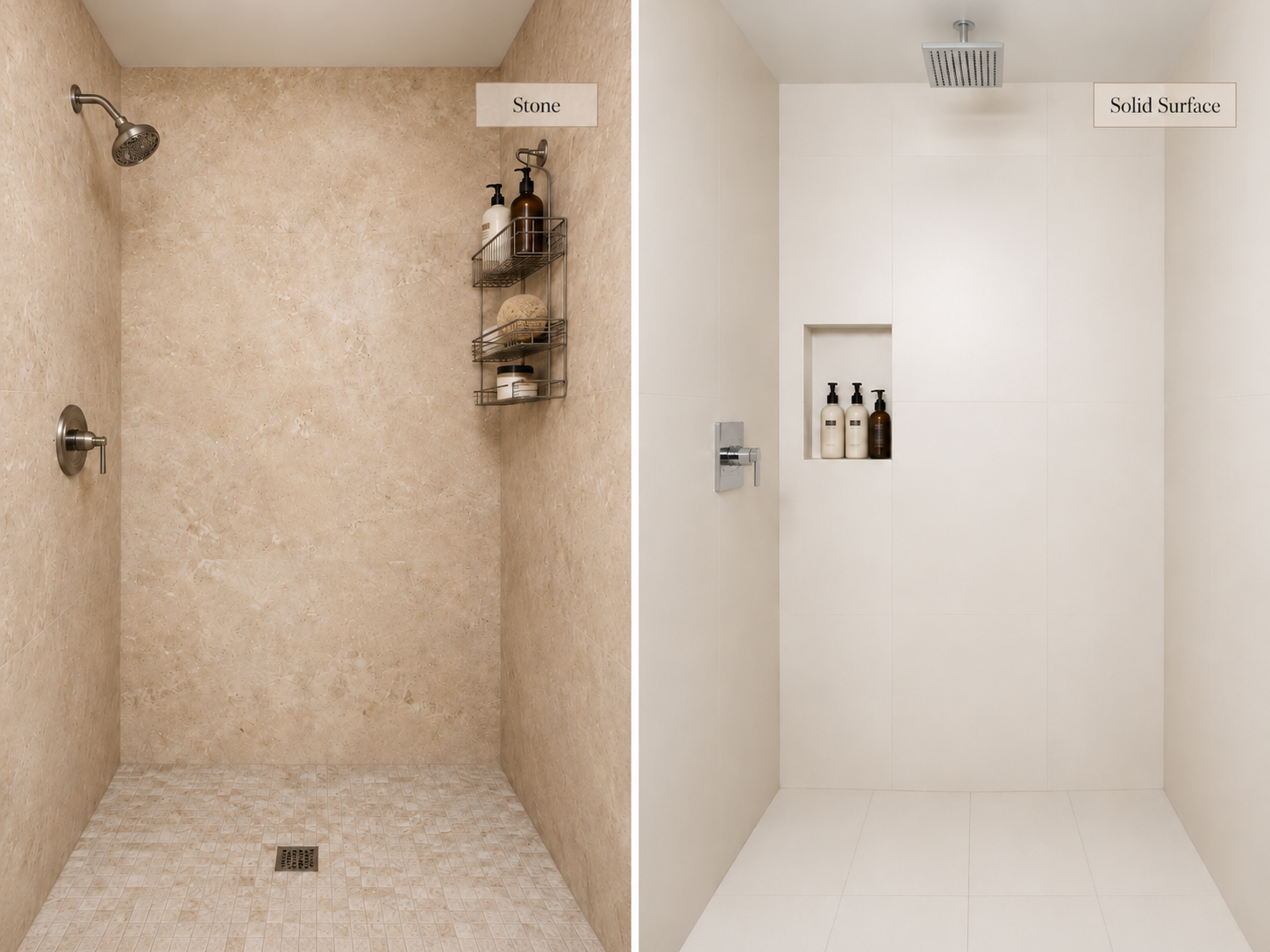
Stone vs. solid surface showers usually comes down to what you want the bathroom to feel like, how much maintenance you want to manage, and how the shower will be used over time. Natural stone can bring variation, movement, and a more custom look, but it often asks for more care in a wet space.
Solid surface showers offer a cleaner, more consistent design with fewer grout lines and a simpler routine. This article compares design, maintenance, and long-term fit so you can choose the option that makes sense for your bathroom.
What Stone and Solid Surface Showers Offer Visually
The visual difference between stone and solid surface showers starts with how much variation you want to see in the room.
Natural stone can bring movement, color shifts, and a surface that feels different from one slab to the next. That can be a good fit when the shower is meant to feel more expressive or when the rest of the bathroom is simple enough to let the material stand out.
Solid surface showers usually create a cleaner and more consistent look. The wall panels can make the shower feel calmer, especially when paired with a coordinated shower pan and accessories.
Neither direction is automatically better. The stronger choice is the one that fits the bathroom, the cleaning routine, and the way you want the space to feel over time.
How Maintenance Expectations Differ
Maintenance is one of the biggest differences between natural stone and manufactured shower surfaces. Natural stone can be beautiful in a bathroom, but it usually asks for more attention in a wet area. Depending on the material, it may need sealing, gentler cleaners, and more care around soap residue and moisture.
Solid surface showers are often simpler to live with because they can reduce grout lines and create a smoother wall surface. That does not mean there is no upkeep. It means the routine is usually more straightforward.
If you are weighing those tradeoffs, this guide to stone showers vs. cultured marble can help you compare the care expectations more closely before choosing.
Choosing the Right Shower Material for Your Bathroom
The best shower material depends on how the bathroom is used. A guest bath that sees occasional use can allow for different choices than a primary shower used every day. A bathroom for kids, guests, or aging-in-place planning may need even more attention to cleaning, access, and long-term durability.
Natural stone
For a natural stone shower, the benefit is visual character. Each piece can bring movement and variation that feels hard to duplicate. The tradeoff is care. In a wet space, that usually means being more consistent with sealing, cleaning products, and moisture management.
Solid Surface showers
For solid surface showers, the benefit is control. The look is more consistent, the wall panels can feel cleaner, and the routine is often easier to manage. Cultured marble is another manufactured shower surface Carolina Custom Surfaces offers for custom shower walls, pans, and accessories. It is not the same material category as solid surface, but homeowners often compare them because both can support larger panels, fewer grout lines, and a more coordinated shower system.
The right choice should come from the way the room will be used, not just the surface that catches your eye first.
Compare Shower Materials With the Full Bathroom in Mind
A shower material should not be chosen by itself. It needs to work with the rest of the bathroom, especially the vanity, flooring, wall color, lighting, and fixture finishes.
Before choosing, step back and look at the whole room. A material with strong movement may look beautiful on its own, but it can feel busy if the bathroom already has patterned flooring or a detailed vanity top. A quieter surface may seem simple in the showroom, but it can be the better choice if the room needs balance.
A few questions can help narrow the decision:
- Will this shower be used every day or only occasionally?
- Does the bathroom already have a strong design feature?
- Do you want the shower to stand out or support the rest of the room?
- How much cleaning are you realistically willing to keep up with?
- Will the surface still make sense if you update fixtures or paint later?
That last question matters. The best choice is usually the one that still feels right after the first impression wears off.
Compare Shower Options With a Clearer Starting Point
Choosing between natural stone, solid surface, and cultured marble is easier when you can see the materials beside each other. Photos can help with early ideas, but they do not always show surface movement, finish, color depth, or how a material feels in the room.
At Carolina Custom Surfaces, our Greensboro showroom gives you a place to compare options in person and talk through what each choice would mean for your bathroom. We can help you look at custom shower walls, shower pans, accessories, maintenance expectations, and the kind of design that will work best for your space from consultation to installation.
FAQs About Stone vs. Solid Surface Showers
What is the difference between stone and solid surface showers?
Natural stone is quarried from the earth, so each piece has its own color, movement, and variation. That can make a shower feel more custom, but it also means the material may need more care in a wet area. Solid surface showers are manufactured to create a more consistent look, often with larger wall panels and fewer grout lines.
Are solid surface showers easier to clean than stone?
In most homes, yes. Solid surface showers usually have fewer grout lines and a smoother wall surface, which can make routine cleaning more straightforward. Natural stone can still work in a shower, but it often needs more attention to sealing, cleaner selection, and moisture exposure.
Is cultured marble a solid surface shower material?
Cultured marble is a manufactured shower surface, but it should not be treated as the same material as solid surface. Carolina Custom Surfaces offers cultured marble for custom shower walls, pans, and accessories, and many homeowners compare it with solid surface because both can support larger panels and fewer grout lines. It is not the same as natural stone.
Are natural stone showers worth considering?
They can be, especially if you want natural variation and a more expressive material. The important part is understanding the care before choosing. Natural stone in a shower may need sealing, careful cleaning products, and more consistent upkeep than a manufactured surface. If that feels manageable, it may still be a good fit.
How do I choose between stone, cultured marble, and solid surface showers?
Start with how the shower will be used. If the bathroom gets daily use and easier cleaning is a priority, cultured marble or another manufactured surface may make more sense. If visual character matters most and you are comfortable with more care, natural stone may be worth comparing. Seeing the materials in person usually makes the decision clearer.


